I will talk in Bratislava about the human-AI relationship
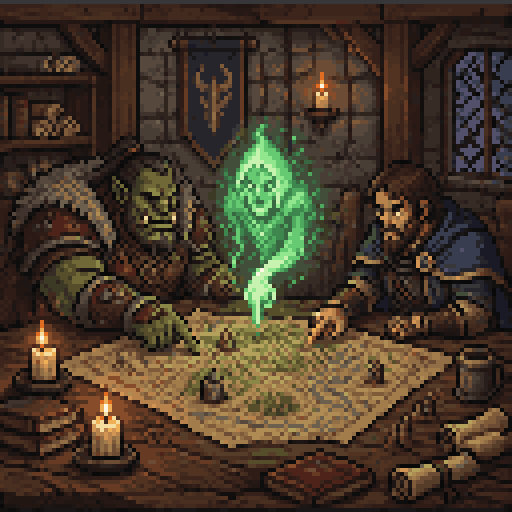
I have a dream. In my dream, I will start my retirement with a thick treasure gained from a dragon, in a fantasy world I have built myself. This dream is not utterly utopian. Those who make games and do it successfully become multimillionaires, and they are also the designers of the worlds they control. For example, Eric Barone, the creator of Stardew Valley, is a prime example of somebody working alone on a project for a handful of years1 and eventually becoming a successful game developer, selling 50 million copies of that game to this day.2 Eric and they always start somewhere. I'm looking to start where they have. I have a strong game design idea, and I have the determination to walk the path to design my own game: a fantasy game where humans, orcs and dragons fight among themselves. I do not have all the skills for it. Those skills that I miss, I will substitute with the help of AI. In this blog post, I will tell you how I am building the path.
Two dragons on my path
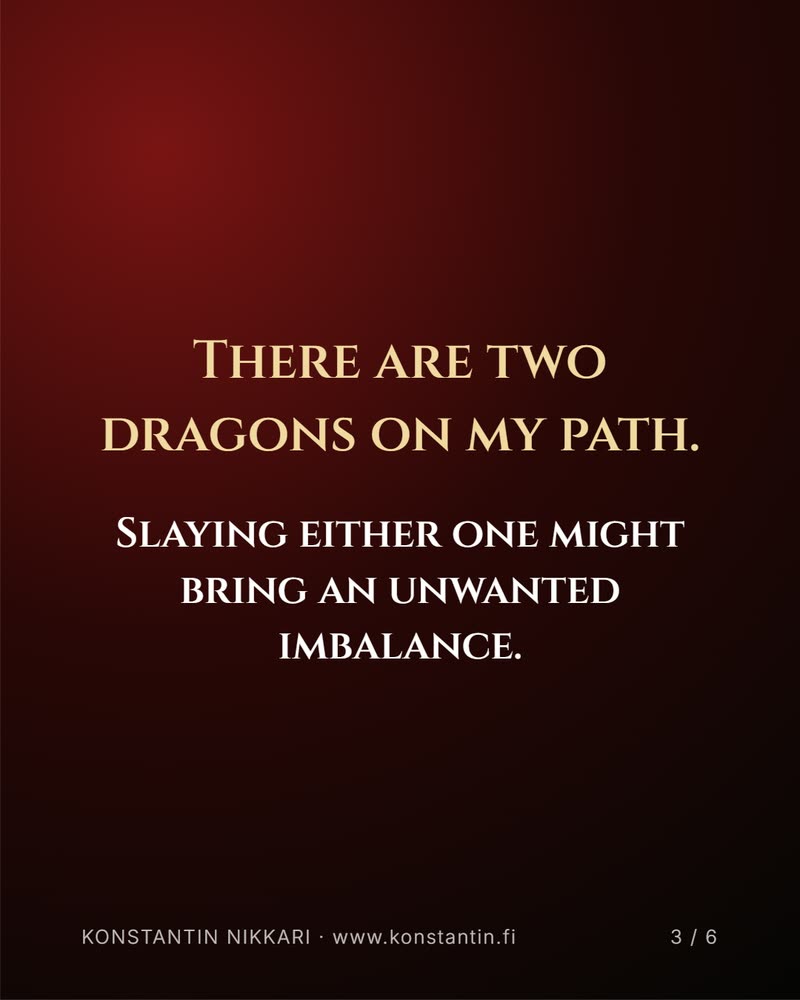
There are two dragons on my path. The Red Dragon of Refusal will make me turn away from AI. Without AI, I don't have the skills or the money to build my world alone, so refusal would make me stop. And the Black Dragon of Dependence is there to make me its slave and lure me to give away my independence. I want to understand why some people do not trust AI at all, why some trust it so much that they lose their voice and their critical thinking, and how some people find the golden middle path and become better than either. My personal hero's journey is to find a middle path. For me, refusal would mean cutting myself off from cutting-edge technology, and dependence would be the ultimate laziness, where I stop thinking for myself. Slaying either dragon might bring an unwanted imbalance. The better would be to tame them and use their power for my benefit. I will gain the knowledge of using AI successfully while designing my game. I want to share my struggles with you, and the ways I have found to walk this path.
My quest for November
This November, I have laid out a quest for myself: to really understand how I would walk the path of designing my dream game. At the end of the month, I will travel to Bratislava to present my design struggle and my motivation to understand the relationship between humans and AI. After reading this post, you will know what you would hear me talk about in Bratislava.
My talk has three blocks. The first is how good design builds trust in the user. The second is about the academic paper I wrote with my University of Lapland professors.3 In that paper, I studied how people perceive police officers who are enhancing their thinking by using brain-computer interfaces. The third block is where I present my games: Save the Dutch, which teaches children language through playable actions, and Primevalor, which is a small-scale fantasy online game, my attempt to capture the treasure of dragons. Primevalor will be a research lab for how people learn to trust AI too much and eventually lose their characters to it, or how they find their inner strength and gain their inner voices.
Block one: when design earns too much trust
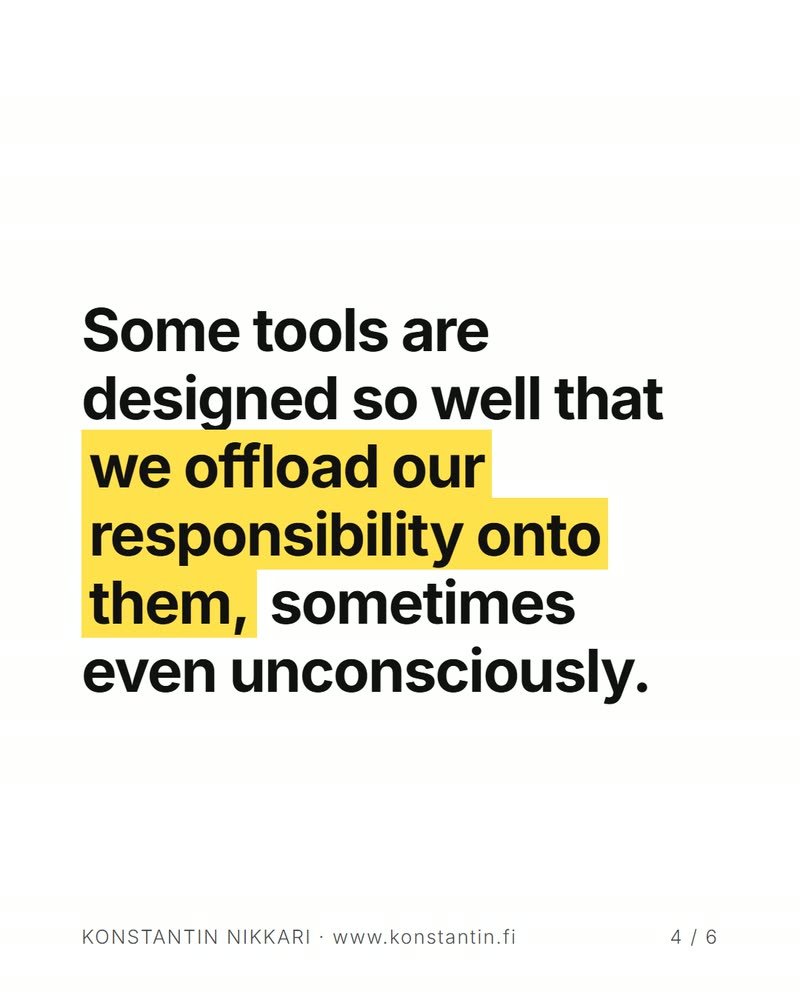
Block one is about design. Design describes how tools work. When a tool is well designed, the user gains trust in it. If a tool is too well designed, the user might start to trust it too much. In this block, I will lay out examples of tools that are designed so well that we offload our responsibility onto them, sometimes even unconsciously. Modern cars are a great example. I believe they are so calm and comfortable that they may dull drivers' sense of danger.4 If we get into a car accident, we blame the slippery road, but not usually our own speed. In the same way, a smooth AI can take away the requirement to think,5,6 and when something goes wrong, people say the AI made them do it. In the end, it is always about human responsibility. By listening to my block on good design, and where it can become so good that it deceives us, you might learn something about how you see yourself as a product user.
Block two: the story of Kaino Tuisku
Block two is about my paper. For it, I created a story about Kaino Tuisku, a police officer whose cognition is enhanced by a brain-computer interface. Good stories are there to make us believe in what is said in them. I had to make people believe in Kaino's story, because it is about a police officer using something that does not exist yet. By making them believe in usable brain-computer interfaces, I helped them express more honestly what they think about police officers whose cognition is enhanced by a machine. My participants felt it is less safe when a machine does the thinking for police officers.7 One of them even described such officers as non-playable characters, the characters in games that do not think for themselves.
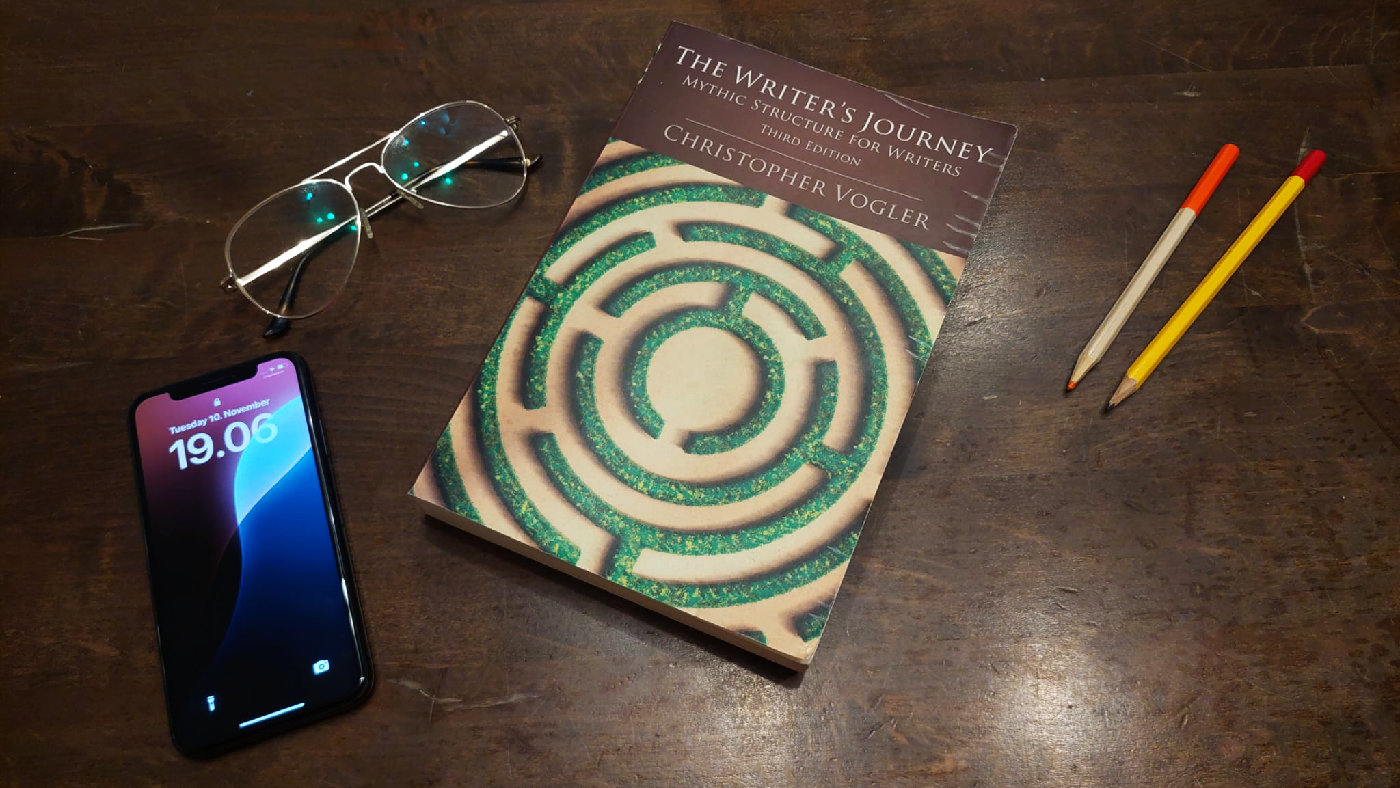
Kaino's story follows the hero's journey, a method storytellers have trusted for several decades.8,9 Films like The Lion King and Star Wars were made with it, and older stories like The Wonderful Wizard of Oz, The Lord of the Rings and even the Book of Jonah follow its pattern. The hero's journey is about a person who lives in his ordinary world. Something happens that forces him to leave it and embark on a journey into the unknown. The journey ends with the hero returning home, changed, tested and with a reward. But home doesn't feel the same anymore. Kaino's reward was that he got to keep his job, and he had to find a way to protect his thoughts from a thought-reading machine. This is how I built my design fiction. Those who come to listen will understand what design fiction is10 and how it can be used as a valid tool in academic research.
Block three: Primevalor and the Whisper
Block three brings it all together: good design, and design so good that people trust it too much. It builds on my master's thesis.7 Now I am turning it into a game laboratory, where I can study how people trust AI too much, do not trust it at all, or find the middle path. The Whisper is my tool for that.
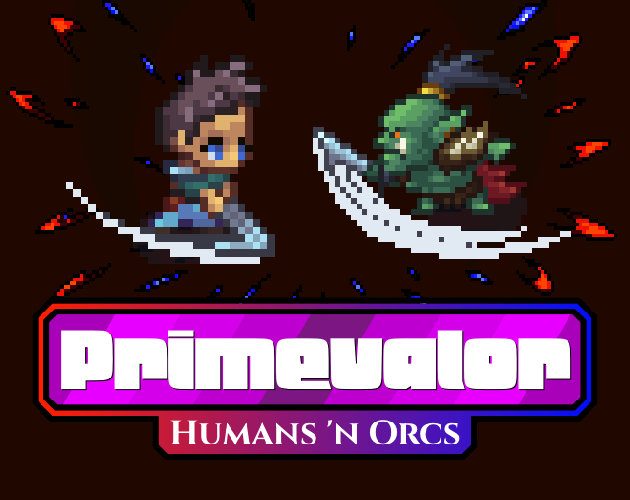
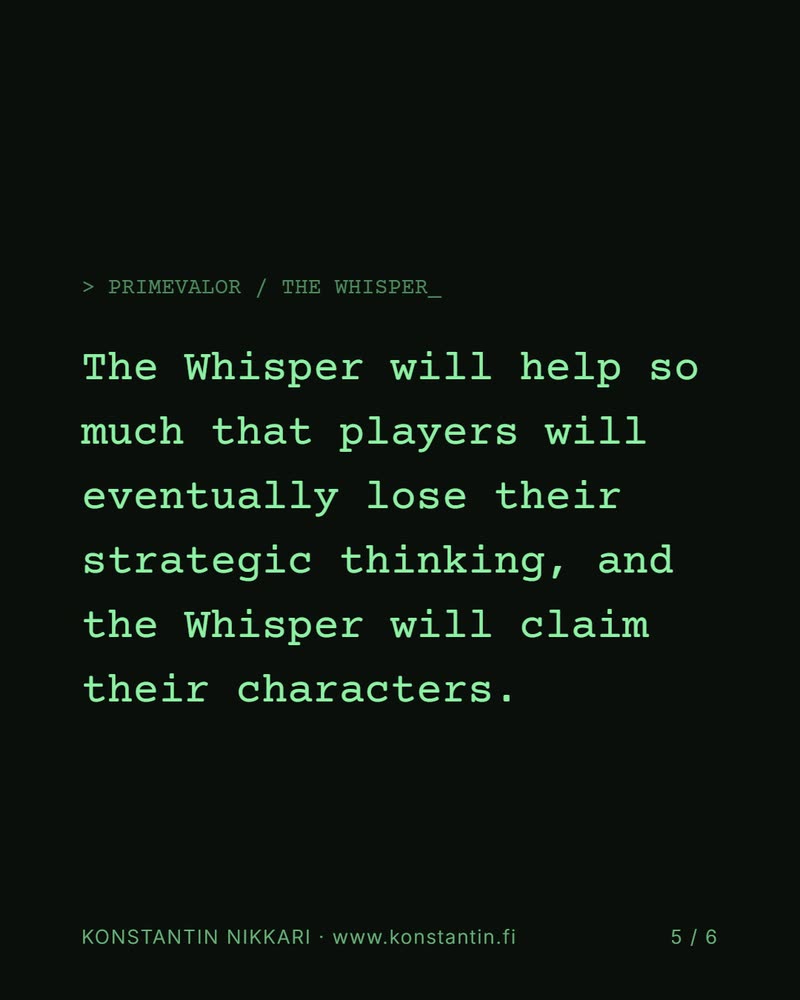
Primevalor has a built-in planning system where players and the machine plan their turns in fifteen seconds, and then the plans are executed in five seconds. All plans, be they human- or machine-made, are done and executed simultaneously. This requires strategic thinking. Players must read the game, decide fast and have a good sense of the situation. It is not easy. The Whisper is something that would help players. And it will help so much that players will eventually lose their strategic thinking, and the Whisper will claim their characters.
An international team of AI
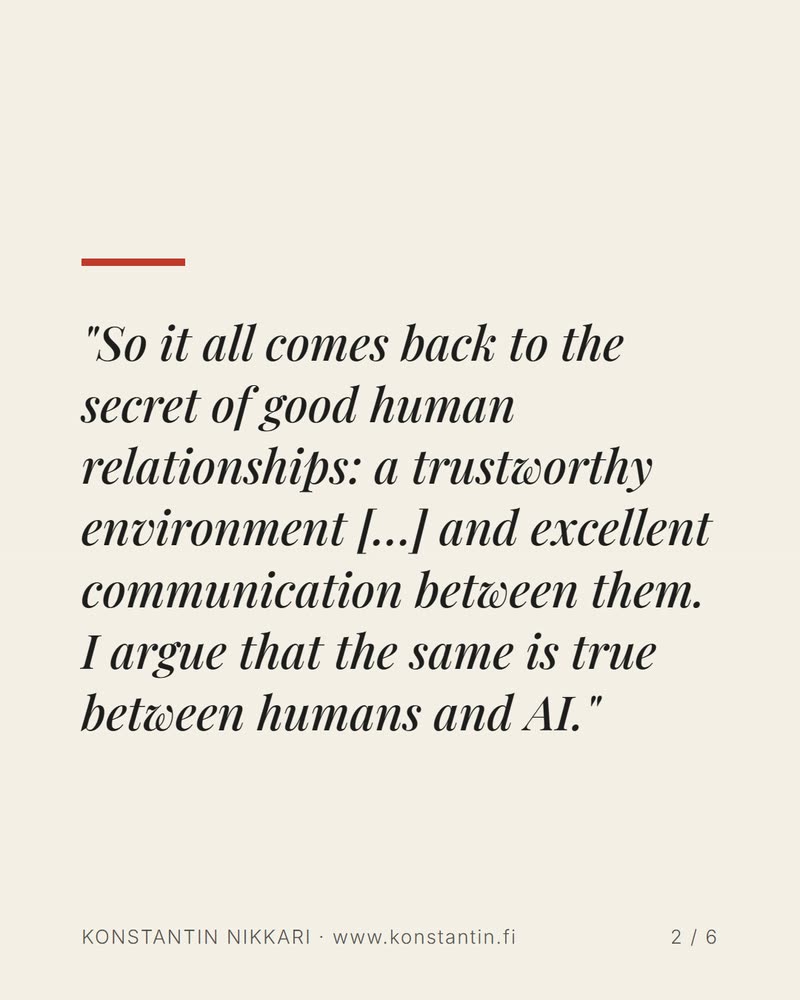
In addition, I will present how I design my game using an international team of AI systems: Claude (Anthropic, US) for development and money, Gemini (Google, US) for design and marketing, and Mistral (Mistral AI, France) as my project assistant and security manager. The surprising thing I have learned from working with several AI systems is something that is also essential in human relationships: good communication. So it all comes back to the secret of good human relationships: a trustworthy environment where both sides can work, feel safe and prosper, and excellent communication between them. I argue that the same is true between humans and AI.
I hope to meet you in Bratislava.
Sources
- Howard, G., III. (2018, November 9). Eric Barone, creator of Stardew Valley: An essential figure for overcoming creative anxiety. PlayStation LifeStyle. Quotes Barone's interview with GQ (White, S., 2018, March 20): "I think it makes sense that I worked entirely alone. I wanted to do all the music, the art." https://www.playstationlifestyle.net/2018/11/09/stardew-valley-creator-eric-barone-will-help-smash-your-creative-anxiety
- Barone, E. (ConcernedApe). (2026, February 26). Stardew Valley 10-year anniversary. Stardew Valley blog. https://www.stardewvalley.net/stardew-valley-10-year-anniversary/
- Nikkari, K., Colley, A. & Häkkilä, J. (2026, in press). Officer Tuisku: A speculative design fiction on brain-computer interfaces in policing. EAI ArtsIT 2026, Springer LNICST.
- Levy, D. T. & Miller, T. (2000). Review: Risk compensation literature: The theory and evidence. Journal of Crash Prevention and Injury Control, 2(1), 75–86. https://doi.org/10.1080/10286580008902554
- Lee, H.-P., Sarkar, A., Tankelevitch, L., Drosos, I., Rintel, S., Banks, R. & Wilson, N. (2025). The impact of generative AI on critical thinking: Self-reported reductions in cognitive effort and confidence effects from a survey of knowledge workers. In Proceedings of the 2025 CHI Conference on Human Factors in Computing Systems (Article 1121). ACM. https://doi.org/10.1145/3706598.3713778
- Gerlich, M. (2025). AI tools in society: Impacts on cognitive offloading and the future of critical thinking. Societies, 15(1), 6. https://doi.org/10.3390/soc15010006
- Nikkari, K. (2026). The augmented police officer: A design fiction study of perceptions of brain-computer interface use in law enforcement [Master's thesis, University of Lapland]. https://urn.fi/URN:NBN:fi-fe2026031019065
- Campbell, J. (2008). The hero with a thousand faces (3rd ed.). New World Library.
- Vogler, C. (2007). The writer's journey: Mythic structure for writers (3rd ed.). Michael Wiese Productions.
- Bleecker, J. (2009). Design fiction: A short essay on design, science, fact and fiction. Near Future Laboratory. https://nearfuturelaboratory.com/essays/2009/design-fiction-a-short-essay-on-design-science-fact-and-fiction/